



Many patients visit our clinic in Surat with clean front teeth but severe decay in the back. They brush twice daily and cannot understand why their gums still bleed. The reality is that brushing only cleans about 60 percent of your tooth surfaces. The remaining 40 percent consists of tight spaces between teeth and the area beneath the gumline. Relying only on a toothbrush is like washing the outside of a cup and calling it clean. Understanding how to maintain oral hygiene at home requires addressing the microscopic ecosystems in these hidden corners.
The Hidden 40%: Why Brushing is Only Half the Battle
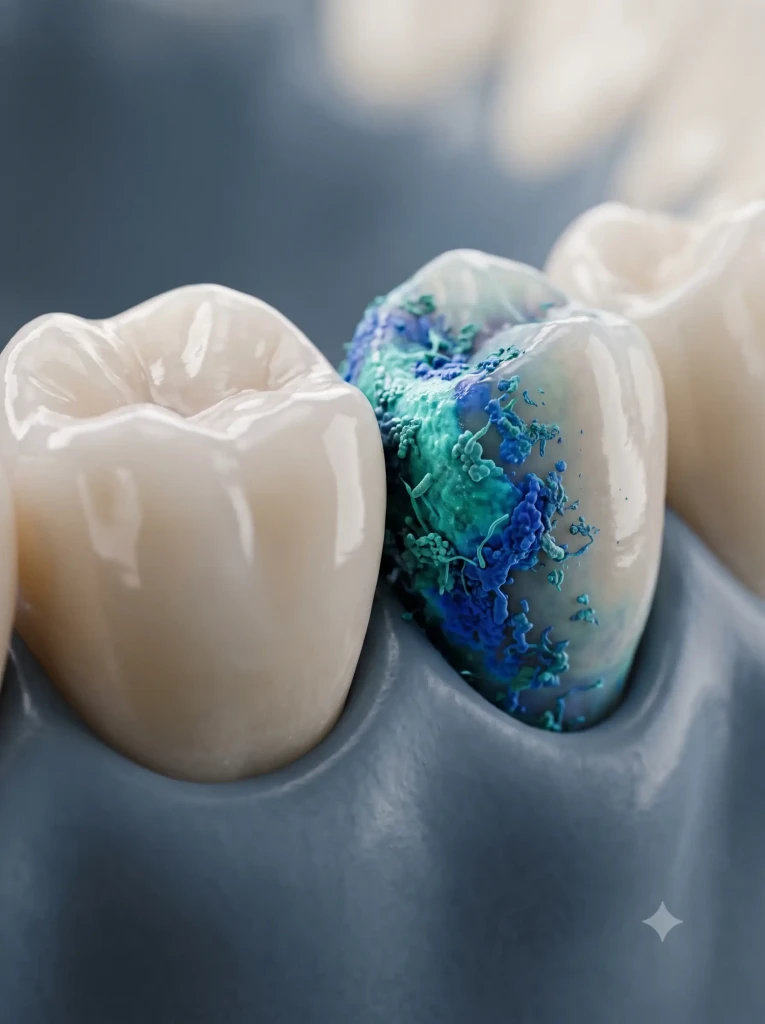
To understand why brushing falls short, we must look at how dental plaque behaves. Plaque is a sticky biofilm of active bacteria that adheres to every tooth surface, especially where bristles cannot reach. Left undisturbed, plaque absorbs minerals from saliva and hardens into tartar within 24 hours. Once plaque calcifies, you cannot brush it away at home. This hard crust provides a rough surface for more bacteria, causing gum inflammation. This inflammation starts gingivitis, which can progress to periodontal disease. You must disrupt this biofilm daily before it mineralizes.
How to maintain oral hygiene at home: A Practical Protocol
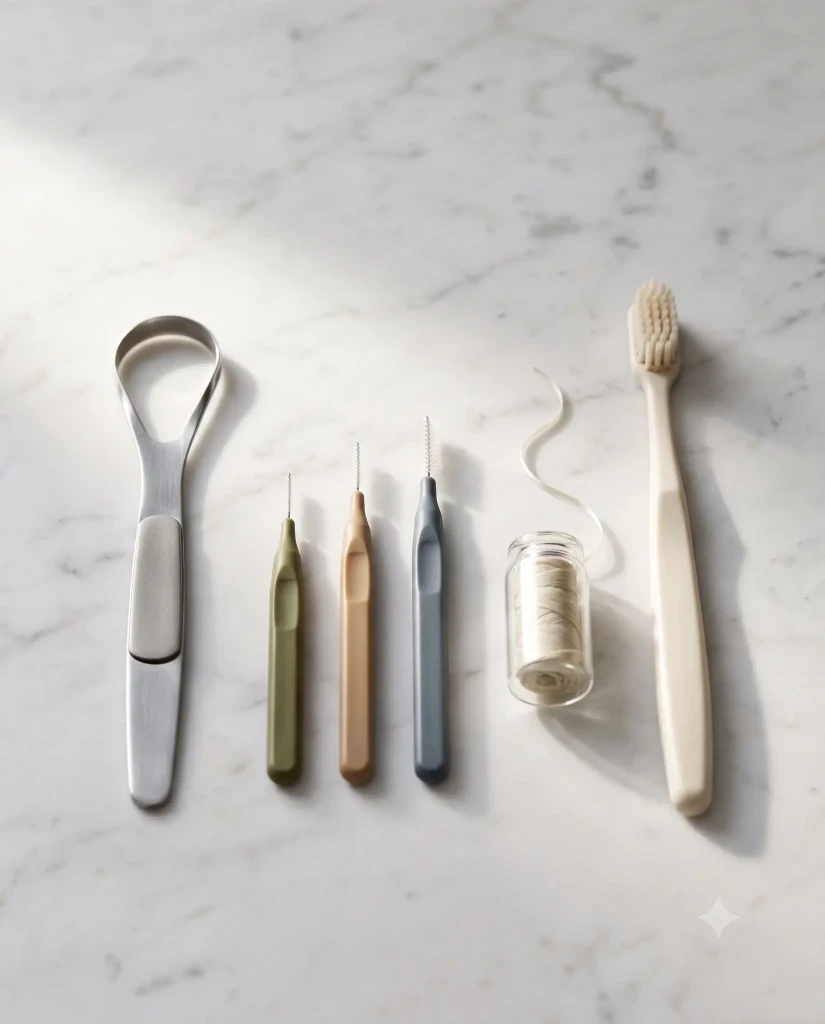
Effective cleaning requires a systematic routine targeting every surface. First, clean the spaces between your teeth before brushing. This loosens debris and allows fluoride to penetrate deeper. While dental floss works, interdental brushes are often more effective for wider gaps or mild gum recession. These tiny circular brushes slide between teeth to sweep the surfaces clean. If you experience persistent bleeding, seek professional care through our gum treatment services before starting aggressive home regimens. Second, brush with proper technique rather than heavy pressure. Scrubbing back and forth can cause gum recession and enamel wear. Instead, hold your brush at a 45 degree angle to the gumline and use gentle circular motions. This technique, the Modified Bass Method, sweeps plaque from the shallow gum pockets. Third, clean your tongue. It is covered in tiny papillae that trap food and bacteria. Using a dedicated tongue scraper daily physically removes this bacterial load to target bad breath.
Is flossing really mandatory?
The short answer is yes, but your method can vary. Many patients abandon flossing because it feels difficult or causes bleeding. However, bleeding is simply a sign of active inflammation from accumulated plaque. Consistent, gentle cleaning will resolve this bleeding within a week as gums heal. In practice, most people skip this step entirely and their gums pay the price. If traditional floss is too difficult, a water flosser is an option. These devices use pressurized water to flush debris from between teeth. While excellent for rinsing, they do not replace the physical scraping of floss or interdental brushes. Combining physical scraping with water irrigation provides the best results.
Can a tongue scraper reduce bad breath better than a brush?
Brushing your tongue with a toothbrush is better than nothing, but it is inefficient. Bristles are designed for hard enamel, not soft tissue, and often push biofilm deeper into tongue grooves. A metal or plastic tongue scraper lays flat, lifting away bacteria, dead cells, and food debris when drawn from back to front. This coating contains anaerobic bacteria that produce volatile sulfur compounds, the main cause of bad breath. Look, it is not a miracle cure, but it is the most practical way to keep your breath fresh. Scraping takes seconds and vastly improves oral freshness.
The Surat Diet and Your Teeth: Managing Farsan and Sweet Cravings
Surat is famous for culinary traditions, but local favorites like starchy surti locho, sticky farsan, and sweet ghari challenge your teeth. These foods contain high levels of carbohydrates and sugars that feed harmful oral bacteria. When you eat them, bacteria ferment the carbohydrates and produce acid. This acid attacks enamel, stripping minerals in a process called demineralization. Saliva naturally neutralizes this acid and restores minerals, but this recovery takes 30 to 40 minutes. Snacking throughout the day keeps your mouth highly acidic, preventing enamel recovery and causing rapid decay. You do not have to give up local delicacies, but you should change how you eat them. Enjoy them during main meals rather than snacking constantly to limit acid exposure. Rinse your mouth with plain water immediately after eating to wash away sugars. Regular checks help catch decay early. Explore our preventive dentistry solutions to keep your enamel strong.
Choosing Your Chemistry: Active Ingredients That Work
Choosing the right products supports your daily routine. Walk past the marketing claims on the front of packaging and read the active ingredients on the back. For daily brushing, a fluoride toothpaste remains the standard for enamel protection by making teeth more resistant to acid. If you have sensitive teeth, look for formulations with potassium nitrate or arginine to block pathways to dental nerves. For mouthwash, avoid products with high alcohol concentrations. Alcohol dries the mouth and reduces saliva flow, creating an ideal environment for plaque producing organisms. Opt for alcohol free formulations instead. Use specialized antibacterial rinses only as directed, as prolonged use can stain teeth and alter taste.
“Saliva is your mouth’s natural defense system. Any product or habit that dries out your mouth eventually invites decay and gum disease.”
Partnering with Professionals in Surat
A thorough home routine is the foundation of preventive care, but it does not replace professional clinical evaluations. Even with excellent technique, some areas require professional cleaning. Over time, minor plaque in hard to reach pockets hardens into calculus, which requires specialized scaling instruments to remove safely. For personalized guidance on how to maintain oral hygiene at home, our clinical team at Denticare India is here to help. We can identify areas you might miss and recommend tools for your unique anatomy. Schedule a comprehensive evaluation today by visiting our contact page.
Ready for a Healthier, Brighter Smile?
Don’t wait for dental discomfort to take action. Schedule a professional cleaning and personalized home-care guidance with the expert team at Denticare India in Surat today.
Frequently asked questions
How often should I replace my toothbrush or brush head?
Replace your toothbrush or electric brush head every three to four months, or sooner if bristles fray. Frayed bristles are less effective and can irritate gums. It is also wise to replace your brush after recovering from an illness to prevent reintroducing bacteria.
Can I use a water flosser instead of traditional dental floss?
A water flosser is excellent for cleaning around bridges, braces, or wide gaps, but it does not replace the physical scraping of traditional floss or interdental brushes. For the best results, use a water flosser to rinse loose debris, followed by physical flossing to scrape away the sticky biofilm.
Why do my gums bleed when I clean between my teeth?
Bleeding gums usually indicate early inflammation, or gingivitis, caused by plaque along the gumline. Stopping your cleaning routine is a mistake. Gentle, consistent cleaning with floss or interdental brushes removes the irritating plaque, allowing gums to heal and stop bleeding within a week.
Is it better to brush before or after breakfast?
Brushing before breakfast is recommended because it removes overnight plaque and coats teeth with protective fluoride. If you prefer brushing after eating, wait at least 30 minutes. Acidic breakfast foods temporarily soften enamel, and brushing immediately can cause microscopic wear.
How does drinking water help maintain my oral hygiene?
Drinking water after meals washes away food particles, sugars, and acids that feed bacteria. Water also supports saliva production, your mouth’s natural defense. Saliva contains necessary minerals that rebuild weakened enamel and natural antibacterial properties that control plaque levels.