
- APPOINTMENTS: MON-SAT: 09:00 AM - 08:00 PM
- denticaresurat@gmail.com
- 0261 2211481/82/83



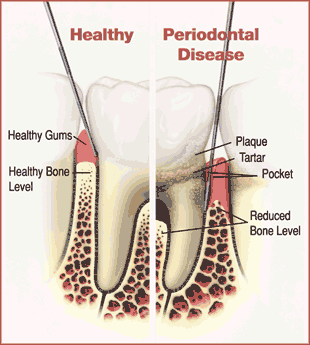
Pocket reduction surgery is a collective term for a series of several different surgeries aimed at gaining access to the roots of the teeth in order to remove bacteria and tartar (calculus). The human mouth contains dozens of different bacteria at any given time. The bacteria found in plaque produce acids that lead to demineralization of the tooth surface, and ultimately contribute to periodontal disease. Periodontal infections cause a chronic inflammatory response in the body that literally destroys bone and gum tissues once they invade the subgingival area . Gum pockets form and deepen between the gums and teeth as the tissue continues to be destroyed.
This procedure normally includes four visits to the dentist. You should expect to be able to work the day after having the treatment done.
The course of treatment described here is one of several options available.
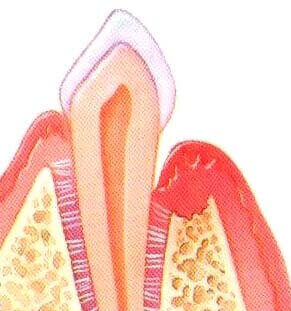
Step 1: Supportive bone around the root is diseased and partially destroyed
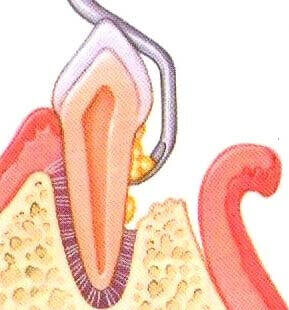
Step 2: First, plaque and tartar are removed from the infected pocket.
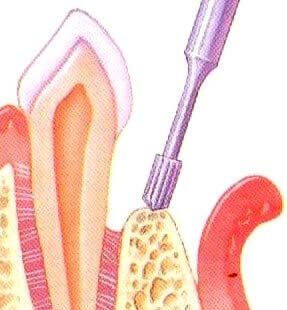
Step 3: The bone is smoothed and reshaped, reducing spaces where bacteria can grow. A substance may be used to help the gum attach to the tooth.
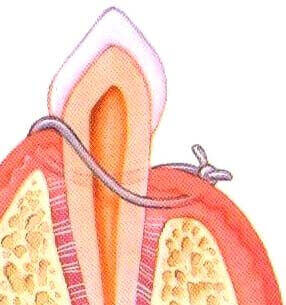
Step 4: The gum is then closed over reshaped bone at or below the original gumline.