
- APPOINTMENTS: MON-SAT: 09:00 AM - 08:00 PM
- denticaresurat@gmail.com
- 0261 2211481/82/83



Implant-retained dentures are dentures that are functionally supported by dental implants. There are a variety of reasons why some people may not be able to wear traditional removable dentures.
Lower Jaw: Losing your teeth leads to bone loss, which continues over time. If a substantial amount of bone is lost, the lower jaw may no longer be able to support a conventional denture. Placing two implants into the lower jaw provides a stable foundation for a denture that the patient may otherwise have been unable to wear.
Upper Jaw: Some people cannot wear traditional upper dentures because the jawbone has shrunk, leaving insufficient ridge and palate depth to support a full denture. Others have an overly sensitive gag reflex and cannot tolerate a denture covering the roof of the mouth. Upper dental implants allow the denture base to be significantly reduced and shaped into an arch rather than covering the entire palate.
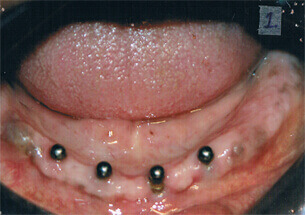
Implant having Ball Attachments (Male)
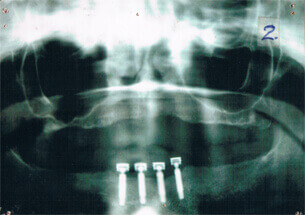
Radiograph of Implants
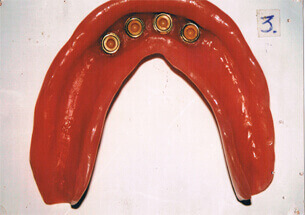
Lower Denture having Socket Attachments (Female)
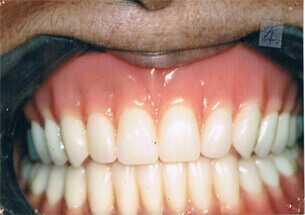
Dentures in the Mouth
Mini implants may be used when traditional implants are not suitable, especially if the patient’s jawbone is not sufficient to support standard implants.
Although mini implants are not considered a long-term solution, they offer several advantages: