




Most people walk into our Surat clinics expecting a grueling ordeal, but the reality of a modern painless root canal treatment is that it feels remarkably similar to getting a routine composite filling. If you are sitting in Varachha or Adajan nursing a throbbing toothache and stalling your dental visit, you are likely reacting to horror stories from decades past. Dentistry has quietly undergone a clinical revolution. Today, we routinely treat deep infections within the dental pulp without causing patients distress during the procedure. The friction point for most patients is not the actual clinical work, but the anticipation of discomfort. By understanding how modern local anesthetics, flexible endodontic files, and digital diagnostic tools operate, you can approach your appointment with confidence. Let us look at what happens behind the scenes in a modern endodontic operatory in Surat.
Understanding the source of dental pain: why do toothaches feel so intense?
To understand why modern treatments are so effective, we must first look at the unique anatomy of a tooth. Unlike other tissues in your body that can swell when inflamed (such as your skin or muscles), a tooth is a rigid structure. The soft tissue inside, known as the dental pulp, contains a rich supply of nerves and blood vessels. When bacteria penetrate this chamber due to deep decay or a crack, the tissue becomes inflamed.
Because the hard outer shell of enamel and dentin cannot expand, the swelling tissue has nowhere to go. This creates intense, localized pressure inside the tooth. It is this internal pressure, not the dental treatment, that causes the agonizing, throbbing pain that keeps you awake at night. When an endodontist opens the pulp chamber during a root canal, they are releasing this trapped pressure. Many patients feel an immediate, profound sense of relief the moment this step is completed. The treatment is not the source of the pain; it is the resolution of it.
Debunking the dental dread: what makes a painless root canal treatment possible today?
In the past, endodontic therapy relied heavily on manual steel files to clean out infected canals. These files were rigid, meaning they could not easily navigate the natural curves of your tooth roots. This friction often translated to pressure and discomfort for the patient. Today, our approach at Denticare India is entirely different.
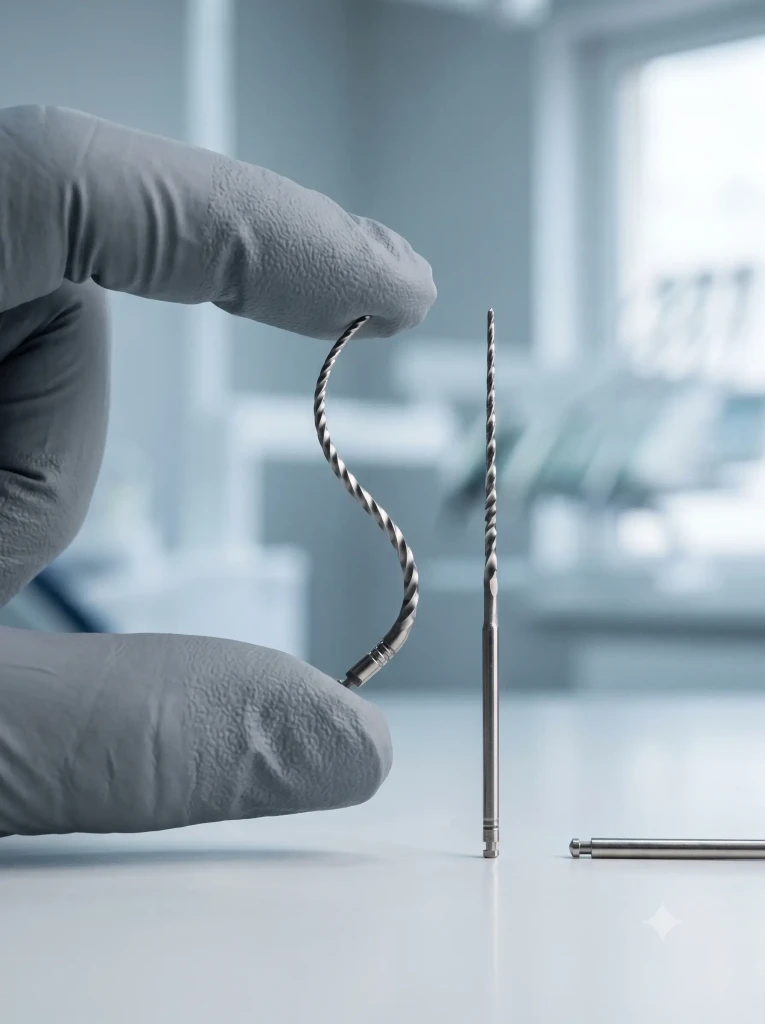
We utilize rotary endodontics, which involves highly flexible nickel-titanium instruments. These instruments are powered by specialized electric motors that control speed and torque with extreme precision. Because they conform to the unique anatomy of your root canals, they clean the space rapidly and smoothly, minimizing the mechanical vibration and tugging sensations that patients used to fear. You can learn more about our modern clinical setups on our specialized endodontic services page.
Alongside these flexible files, we use digital apex locators. This technology allows us to measure the exact length of your tooth root electronically. In older practices, dentists had to take multiple, time-consuming X-rays mid-procedure to verify their position. Now, we get real-time feedback on a digital screen, reducing your time in the dental chair on Ghod Dod Road or Katargam.
Is the anesthesia injection itself going to hurt?
The fear of the needle is perhaps the most common source of dental anxiety. Many patients tell us they would rather endure a mild toothache than face an injection. To address this, we use a multi-step numbing process that virtually eliminates the initial pinch.
First, we dry the gum tissue and apply a high-strength topical numbing gel. This gel sits on the tissue for several minutes, temporarily desensitizing the sensory nerve endings on the surface. When it is time to administer the local anesthesia, we do so using ultra-fine, sterile needles.
The secret to a comfortable injection is not just the needle size, but the speed of delivery. Discomfort during an injection is caused by the rapid expansion of fluid within the delicate gum tissue. By slowly and steadily administering the anesthetic, we allow the tissue to numb ahead of the fluid wave, making the process highly comfortable. For patients visiting our Surat clinics, this careful technique changes the entire experience.
Once the anesthetic takes effect, we apply a rubber dam isolation shield. This is a thin, protective sheet that isolates the target tooth from the rest of your mouth. It prevents saliva (which carries bacteria) from entering the clean tooth canal, and it prevents water or irrigating solutions from collecting in your throat. It creates a dry, sterile workspace, allowing you to relax and swallow normally throughout the session.
The clinical workflow of modern endodontic therapy
Understanding the sequence of your treatment can demystify the process. When you visit our practice, we follow a structured, highly systematic clinical workflow to ensure safety and comfort.
First, we perform a thorough clinical examination and capture high-resolution digital radiographs. In complex cases, we may recommend a cbct scan (cone beam computed tomography) to obtain a three-dimensional view of the root canal anatomy. This helps us identify extra canals or unusual root curvatures before we even begin. Our diagnostics are detailed on our Surat clinic directories page.
Second, we administer the local anesthesia as described. We do not begin any work until you confirm that your lip, chin, and tongue feel completely numb. We test the tooth’s sensitivity to make absolutely sure you feel nothing.
Third, the rubber dam isolation is placed. This step is a hallmark of sterile, modern dentistry.
Fourth, we create a tiny, precise access opening in the crown of the tooth to reach the diseased dental pulp.
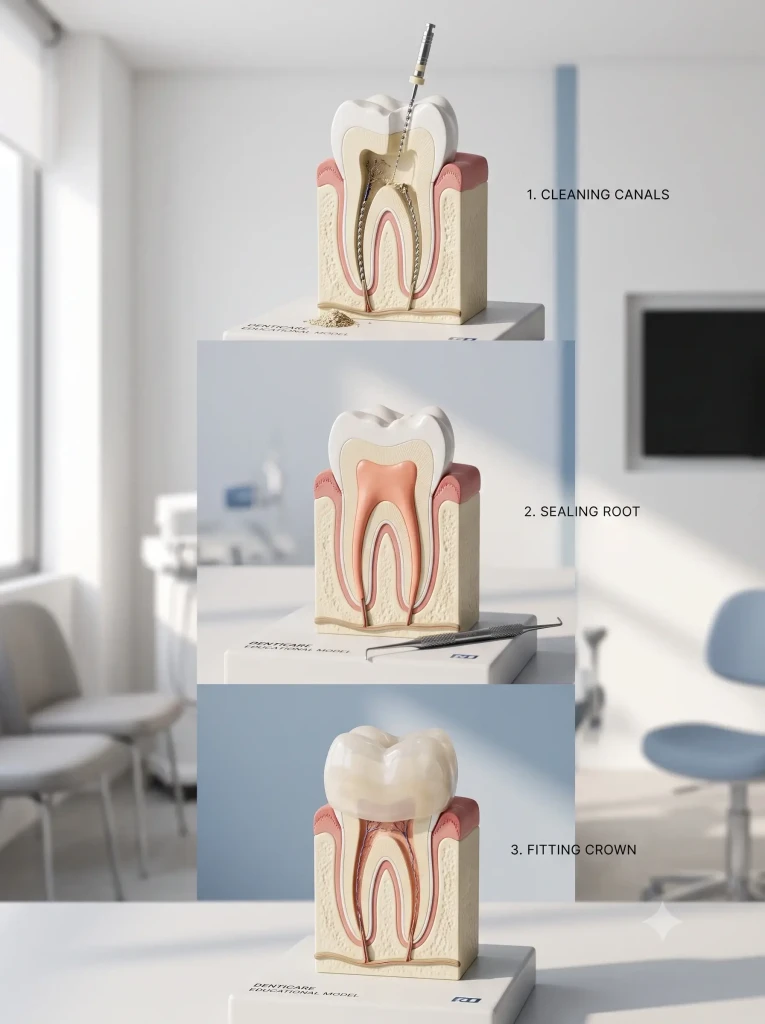
Fifth, using our rotary instruments and mild chemical irrigants, we clean, disinfect, and shape the canals. The irrigating solutions dissolve any remaining organic tissue and kill bacteria hidden in microscopic lateral canals.
Sixth, we fill the clean canals with a biocompatible material called gutta-percha, sealing the space to prevent future bacterial entry.
Finally, we place a strong, temporary restoration over the access opening. Because a root-treated tooth becomes more brittle over time due to the loss of its natural blood supply, we generally recommend placing a custom dental crown within a few weeks to protect it from fracture during chewing. You can read more about our restorative options on our crowns and bridges page.
Can you expect pain after the numbness wears off?
It is realistic to expect some mild, transient sensitivity once the local anesthetic wears off. This is not the sharp, throbbing pain of an active infection; rather, it is a form of post-operative soreness caused by localized tissue inflammation around the tip of the root.
Think of it as the soreness you feel in a muscle after a deep stretch. The ligament surrounding the tooth has been slightly irritated during the cleaning process. This sensitivity is typically mild and resolves within forty-eight to seventy-two hours.
We advise patients to manage this temporary discomfort with standard anti-inflammatory medications. Keeping your chewing pressure off the treated tooth for the first few days also helps the area heal faster. If you experience severe pain or swelling that does not respond to medication, you should contact our Surat clinical team immediately for an evaluation.
Why delaying your root canal therapy leads to more complex issues
Many patients choose to ignore a nagging toothache, hoping the problem will go away on its own. Sometimes, the pain does stop. However, this is usually a warning sign, not a recovery. It means the nerve inside the tooth has died completely.
Once the nerve is dead, the bacterial infection does not stop; it simply moves deeper into the jawbone surrounding the roots. This can lead to a painful abscess, localized bone loss, and systemic inflammation. If you delay treatment too long, the structural integrity of the tooth degrades to the point where a root canal is no longer viable.
When a tooth cannot be saved, the only option left is extraction. Replacing a missing tooth requires more invasive and expensive procedures, such as dental implants or bridges. By opting for a timely root canal, you preserve your natural tooth, maintain your jawbone structure, and avoid the higher costs associated with tooth replacement. If you are noticing persistent sensitivity to hot and cold liquids, pain when biting, or swelling near the gums, seeking an early evaluation at one of our clinics is the most practical choice you can make.
“Preserving your natural tooth is always the primary goal of modern dentistry. A root canal does not destroy your tooth; it saves it from extraction and restores its functional health.”
Do not let outdated fears stand between you and your oral health. Modern endodontic techniques have transformed this procedure into a comfortable, routine experience. If you are experiencing dental pain or have been told you need a root canal, contact Denticare India today. Our skilled clinical team is ready to provide you with a painless root canal treatment that saves your natural smile.
Frequently asked questions
How long does a modern root canal procedure take?
A standard treatment typically takes between 45 to 90 minutes per tooth. In complex cases or teeth with multiple canals, it may require two separate visits to ensure thorough disinfection before sealing.
Will I need a crown after a root canal?
Yes, in most cases, especially for premolars and molars. Removing the infected pulp deprives the tooth of its blood supply, making it brittle over time. A dental crown protects the tooth from fracturing under heavy chewing forces.
Can a root canal be completed in a single visit?
Yes, many uncomplicated cases can be completed in a single visit using modern rotary tools. However, if there is severe swelling, active drainage, or complex anatomy, your clinician may place an antibacterial medication inside the canal and complete the sealing during a second appointment.
What should I eat immediately after the procedure?
You should wait until the local anesthesia has worn off completely before eating to avoid biting your tongue or cheek. Once the numbness is gone, stick to soft foods like yogurt, khichdi, or soup, and avoid chewing directly on the treated tooth.
How do I know if my root canal is failing?
Signs of a failing root canal include persistent pain weeks after the procedure, swelling or a pimple-like bump on the gums near the tooth, or pain when biting down. If you experience these symptoms, contact our clinic for a clinical assessment.